



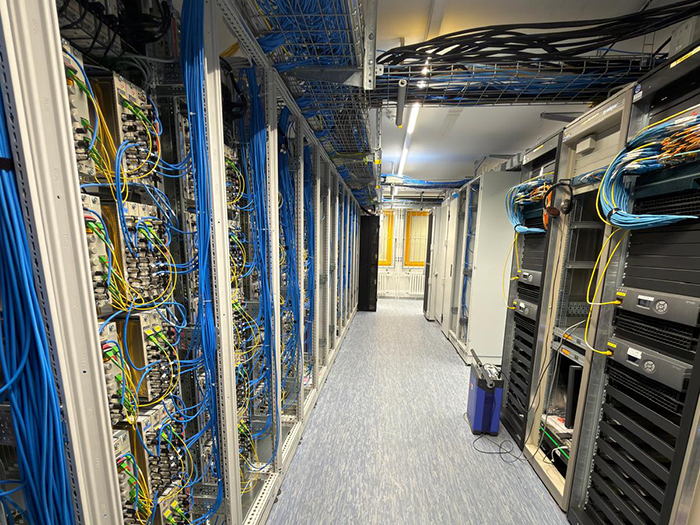
Retrofit refers to the modernization of existing systems, machines, or infrastructure by replacing outdated components or retrofitting with new technology. Instead of completely replacing an installation, it is brought up to a modern standard, technically, functionally, or digitally. The term originally comes from mechanical engineering, but is now also found in building technology and IT infrastructure.
Definition: What does retrofitting mean?
The term retrofitting is composed of the English words „retro“ (backwards) and „fit“ (appropriate). It refers to the subsequent adaptation of an existing system to current technical, energy-related or legal requirements.
Retrofitting differs clearly from purchasing a new system. With a new purchase, the entire system is replaced with a new one. With retrofitting, the existing structure remains intact; individual components or systems are replaced, supplemented, or modernized. The foundation, the static or structural design of the system generally remain unchanged.
The term is used across industries. In mechanical engineering, retrofitting usually refers to the modernization of production facilities. In building technology, it often involves ventilation or climate control systems. In IT infrastructure, such as data centers, retrofitting refers to the replacement of power supply, cooling, or security technology in existing buildings.
Classic retrofitting vs. digital retrofitting
Basically, two forms of retrofitting can be distinguished.
The Classic retrofits includes the physical exchange of components. This includes, for example, the replacement of worn-out components, the installation of more wear-resistant materials, or the modernization of drive technology. The goal is usually higher reliability, longer life, or better energy efficiency of the system.
The Digital retrofits This takes a step further. An existing system is retrofitted with modern sensors, control technology, or communication interfaces to integrate it into a connected production or operational environment in the sense of Industry 4.0. Systems without original interfaces to monitoring or IoT systems can also be retrofitted digitally in this way. In practice, classic and digital retrofits are often combined: A component replacement involves the installation of additional sensors to improve the physical and digital capabilities of an installation.
What goals does retrofitting pursue?
Companies pursue different, often interconnected, goals through retrofits.
- Longevity extensionExisting systems remain operational for longer without the need for a new purchase.
- Cost savings compared to new constructionA retrofit is usually significantly cheaper than a complete new build or purchase.
- Energy efficiencyModern components significantly reduce energy consumption, for example through more efficient drives or cooling systems.
- Compliance with new legal or normative requirementsUpdated safety, emission or construction standards can be implemented retroactively.
- Ensuring the supply of spare partsOutdated assemblies for which no spare parts are available are replaced with current components.
- Integration into modern IT and control environmentsExisting systems can be connected to monitoring, remote maintenance or networked operation concepts.
Advantages and limitations of retrofitting
Retrofitting brings tangible benefits, but it is not necessarily the most economical solution in every case. The following overview sorts out both sides.
|
Advantages |
Boundaries |
|
Lower investment costs than with a new purchase |
Not always more economical than a new build, depending on the condition of the facility |
|
No reconstruction or expansion of the existing hall or infrastructure is necessary |
Cost-benefit analysis required in individual cases |
|
No extensive onboarding of staff, as existing processes will largely remain unchanged |
With very outdated systems, the scope and cost of a retrofit can be difficult to calculate. |
|
Existing substance and foundations remain intact |
Retrofitting reaches its limits when the technical basis of the facility itself is no longer viable. |
Therefore, before embarking on any retrofitting project, a sober cost-benefit analysis is worthwhile. Only then can it be assessed whether modernization actually meets the expectations regarding performance, lifespan, and cost-effectiveness.
How does a retrofit work? Typical steps
Retrofits follow a similar basic pattern regardless of the industry. The following steps can be applied to both production facilities and building or IT infrastructure.
- Analysis of the stock: At the beginning, a detailed inventory is drawn up. This includes an assessment of the current state of the facility, which components are outdated, and where there is a need for technical or legal action.
- Target definition: Based on the analysis, clear goals are set. Should energy efficiency be increased? Should the system be integrated into a modern control environment? Should it meet new safety standards? The goal definition determines the further course of the project.
- Selection of components and sensors: Subsequently, the appropriate components, systems, or sensors are selected. The environmental conditions of the system play a role here, such as space requirements, temperature, and existing interfaces.
- Implementation: This is followed by the actual conversion: the replacement of outdated components, the installation of new technology and its integration into the existing system.
- Commissioning and monitoring: After implementation, the modernized facility will be put into operation and tested. Ongoing monitoring ensures that the intended goals are achieved on a long-term basis.
Retrofit in the data center: Modernization in operation
Retrofitting in a data center differs in one important way from traditional mechanical engineering: Modernization usually takes place while the IT system is operating. Servers, storage systems, and network technology must not fail; a downtime would have immediate consequences for the customers of the data center.
This makes retrofitting projects in data centers more challenging from a planning perspective than in many other industries. Therefore, a thorough preparation phase is required before the actual conversion can be carried out. RZ Consulting, which analyses the existing stock, assesses the potential for modernization, and stages the conversion phases in such a way that operations are not jeopardized.
In practice, a retrofit in the data center usually involves several technical systems at the same time, such as the Server room air conditioning with increasing server density or the USV of the server room to ensure the power supply. Also the Fire protection This often requires adjustments to new standards.
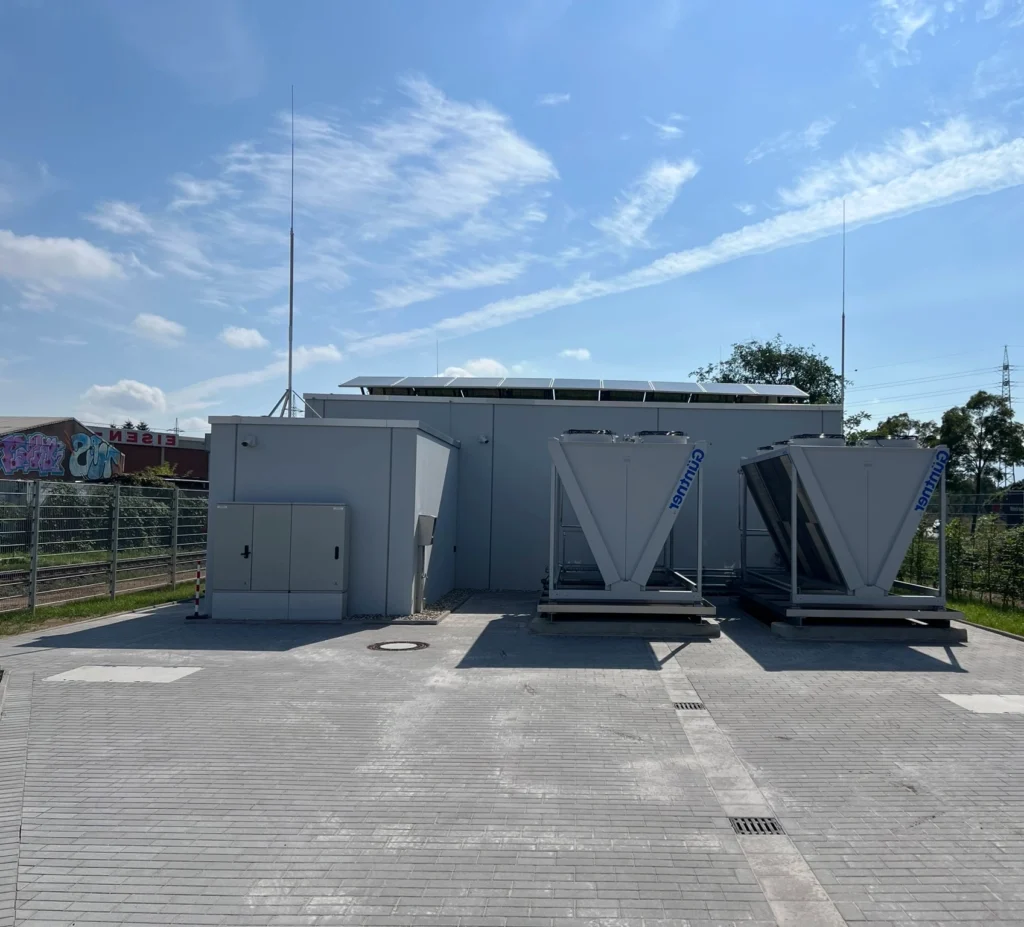
For particularly sensitive projects, where even short interruptions must be avoided, a mobile data center take over the capacities temporarily while the existing facility is being modernized.
Not every company needs a second dedicated data center from the beginning. For the interim period, for example while a georedundant location is planned and built, or for individual projects with a temporary need, a mobile data center It can be deployed at any location at short notice as a flexible interim solution, thus bridging the gap until a permanent georedundant infrastructure is in place.Digital retrofitting in the data center
In the data center as well, digital retrofitting differs from traditional component replacement. In this case, existing systems are upgraded with modern sensors and monitoring systems without changing the basic building or system structure.
At the heart of this is usually the retrofit of DCIM (Data Center Infrastructure Management) sensors that capture temperature, humidity, energy consumption, and utilization in real time. In addition, remote monitoring is often included, allowing the status of critical systems such as cooling or power supply to be monitored even outside the site. Both of these increase transparency about the state of the systems and provide the foundation for predictive maintenance.
Especially in large data centers that have been expanded gradually over the years, a digital retrofit pays off. It improves the existing infrastructure and makes it more efficient. Data center architecture It can be evaluated and controlled without the need for a complete new build.
Retrofit or new construction? When is modernization worthwhile
Not every existing facility can be meaningfully modernized. Whether retrofitting is worthwhile depends on several factors: the structural condition of the facility, the available space, the age of the building technology, and the long-term capacity requirements of the operator.
Retrofitting is usually economically beneficial when the basic building structure and static stability of the building are still intact and the technical systems such as cooling, power supply, or security technology are essentially outdated. However, if the existing area is reaching its capacity limits or the building structure itself is no longer up to date, a new build may be the more economical option in the long run.
For operators who need additional capacity in the short term without having to build or modernize themselves, it is also possible to Serverhousing to be an alternative to your own retrofitting project.
Discuss your data center retrofitting project now
You are planning to modernize your data center or server room and are looking for an assessment of the effort, costs, and implementation? In a non-binding discussion, we analyze your current situation and identify which retrofitting measures are worth implementing for your facility.
Frequently asked questions about retrofitting (FAQ)
What does retrofitting mean?
Retrofit refers to the modernization of an existing system by replacing outdated components or retrofitting new technology without completely replacing the system.
What are retrofitting works?
Retrofit work includes, among other things, the replacement of control technology, the installation of new sensors, the installation of more energy-efficient drives, and the adaptation to current safety standards.
What is retrofitting in Industry 4.0?
In Industry 4.0, retrofitting means the retrofit of existing systems with sensors and communication interfaces, so that older machines and systems can also be integrated into networked production and operating environments.
How much does retrofitting cost compared to new construction?
Retrofits generally cost significantly less than new construction, as existing structures, foundations, and, in some cases, existing infrastructure are used. However, the exact costs depend heavily on the condition of the existing facility and the scope of the planned measures.
How long does a retrofitting project take?
The duration varies depending on the scope, from individual weeks for specific measures to several months for comprehensive renovations of several trades. Careful planning in advance shortens the actual renovation phase.
Is retrofitting also possible during ongoing operation?
Yes, especially in the data center, this is even the standard practice. By carefully timing the individual conversion phases and, if necessary, using interim solutions, ongoing operations can be maintained during the modernization process.