



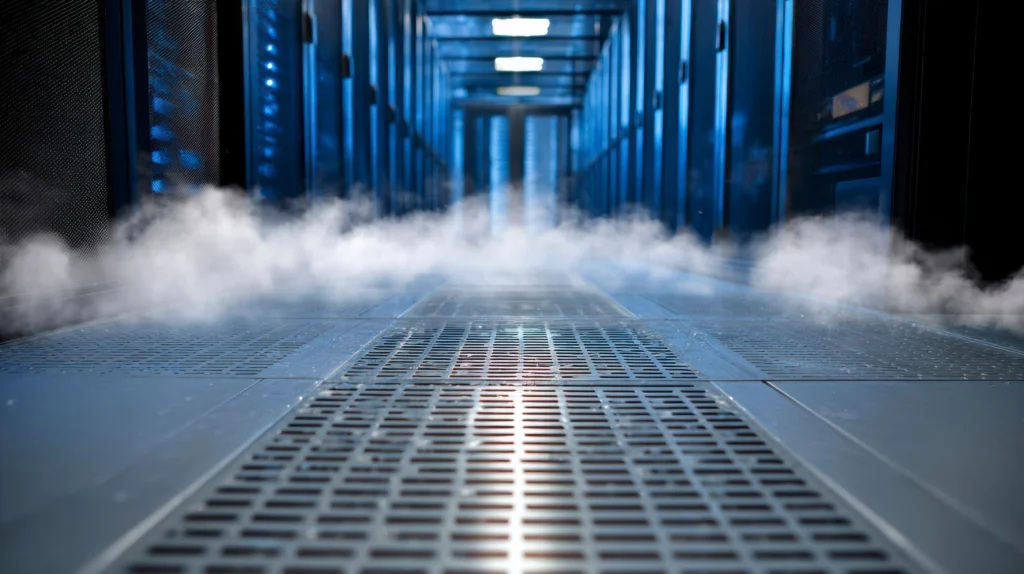
Server Room Fire Suppression System: Secure IT Starts with the Right Fire Protection
Server rooms house central IT systems, the failure of which has immediate consequences for operations. Extinguishing system for the server room enables fast fire fighting without damaging sensitive technology with extinguishing agents.
- Design of the facility based on actual loads, spatial structure, and technical requirements
- Integration with existing systems such as power supply, air conditioning, and fire alarm
- Implementation also with existing systems, while operation continues
Why is a suppression system so important in a server room for businesses?
Server rooms are where central applications, data processing, and communication converge. Even brief interruptions can disrupt operations, delay processes, and lead to economic consequences. Technical defects, overloaded components, or power supply failures are among the most common causes of fires in these areas.
A fire rarely remains confined to individual systems. Heat, smoke, and failures spread rapidly, affecting adjacent infrastructure as well. Without appropriate protective measures, restart times are significantly prolonged, while data loss and production downtime pose additional risks. A fire suppression system in the server room helps to control such scenarios early on and maintain the availability of IT systems.
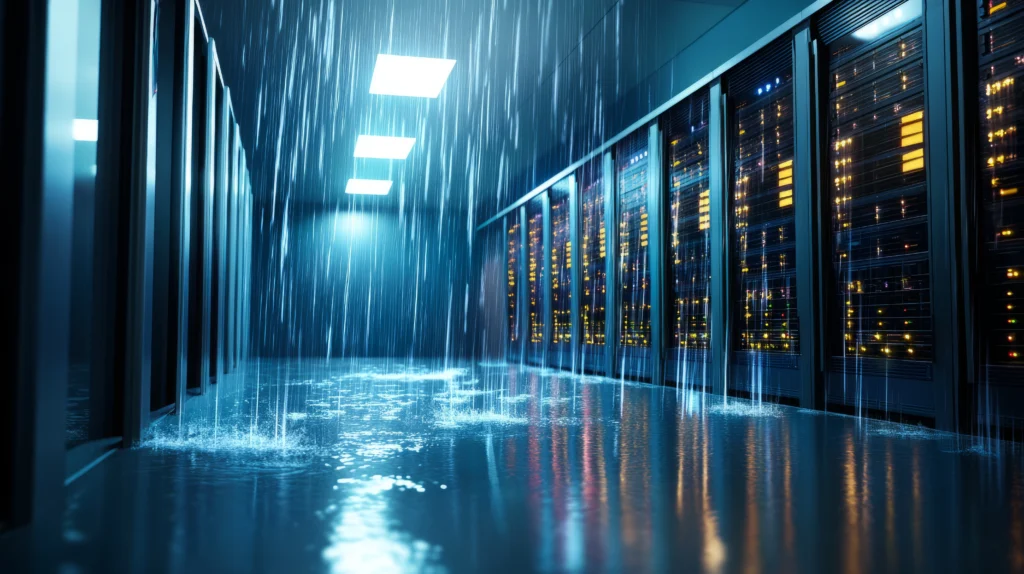
Unsuitable deletion methods – Danger to sensitive IT systems
Conventional extinguishing systems are designed for general fire loads and have limited consideration for sensitive IT infrastructure. Water causes short circuits and failures upon contact with electrical components, while foam and powder leave residues that can permanently damage equipment and wiring.
Even small amounts of moisture or particles are enough to disrupt hardware function and delay reactivation. Therefore, server room fire suppression systems require solutions that effectively combat fires without causing additional damage to IT infrastructure.
Protection for sensitive IT with modern deletion systems for server rooms
For server rooms, extinguishing systems are used that detect fires early and extinguish them without residue. The basis for this is a combination of rapid detection, automatic activation, and even distribution of the extinguishing agent throughout the room. This allows a fire to be stopped in its incipient stage before heat and smoke spread.
Gas-based solutions are used primarily, as they do not damage electrical equipment and do not require cleaning. The IT infrastructure remains largely intact, significantly reducing downtime. At the same time, the server room fire suppression system is designed to match the structural conditions and existing technical systems. Factors such as room size, airtightness, and existing infrastructure are taken into account to ensure reliable operation and seamless integration into existing processes.
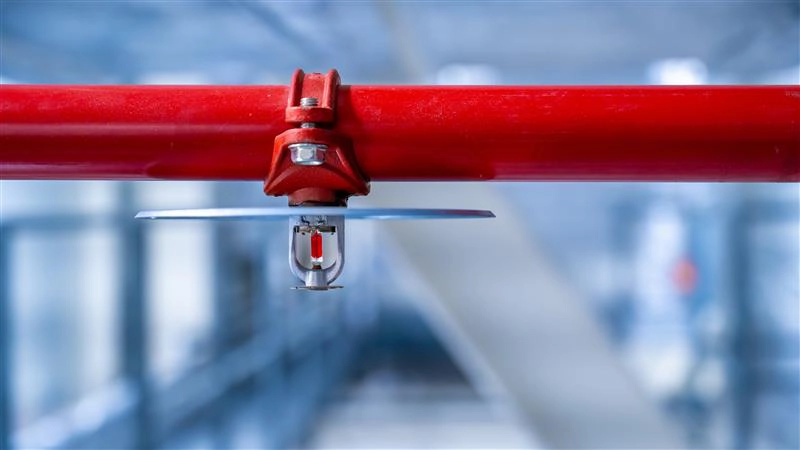
Which extinguishing agents are suitable for server rooms?
Various extinguishing agents are available for a server room fire suppression system, each with different properties depending on the application. In addition to the advantages, limitations that play a role in planning must also be considered.
with a large storage footprint
with regulatory requirements
with restrictions in occupied rooms
What are the differences between room and cabinet extinguishing?
Depending on the IT infrastructure setup, different protection concepts can be considered. A fire suppression system for the server room can either protect the entire room or be designed specifically for individual server racks. The choice depends on the size, usage, and protection requirements of the existing systems.
| Criterion | Room deletion | Cabinet deletion |
| protective scope | entire server room including all systems | entire server room including all systems |
| Area of application | Larger server rooms and data centers | smaller installations or individual critical systems |
| Reaction area | captures fires throughout the room | reacts directly in the affected cabinet |
| Installation effort | higher through integration into spatial structure | low, as compact systems |
| Flexibility for expansion | Overall system adjustment required | Individual cabinets can be supplemented independently. |
Safe implementation of extinguishing systems in new construction and existing buildings
When implementing a fire suppression system for the server room, we consider both structural conditions and existing technical systems. New construction projects differ significantly from retrofitting existing facilities, especially when modifications are made during ongoing operations. We support all steps from the initial analysis to commissioning and tailor the solution to the specific infrastructure.
Analysis of the initial situation:
We are evaluating the spatial structure, available technology, and operational requirements as the basis for further planning.
Concept and Technical Planning
On this basis, we develop a solution that matches usage, infrastructure, and security requirements.
Approval and Voting Phase
We take care of the coordination with authorities and the coordination of all involved trades.
Implementation and Installation
The system will be integrated into new construction or incorporated into existing structures, even while ongoing operations are maintained.
Inspection and commissioning:
Finally, we will test all functions and hand over a ready-to-operate system including documentation.
Sustainable fire protection – extinguishing system for the server room at Daterra
We already consider sustainability when planning a fire suppression system for the server room. In addition to technical requirements, we also incorporate material selection, supply chains, and later operation into our decisions.
- Collaboration with regional partners
- Short transport routes to reduce emissions
- Use of tested and certified components
- Selection of systems with long-term usability
How to keep a fire suppression system permanently operational in a server room?
After installation, a fire suppression system for the server room will only remain reliable if it is regularly inspected and maintained. Technical components such as sensors, controls, and extinguishing agent supplies are subject to various influences during operation and must be checked at specified intervals.
During ongoing operations, we check all relevant functions and ensure that the system triggers correctly in an emergency. This includes, among other things, the inspection of detection devices, the verification of triggering mechanisms, and the evaluation of room parameters. Deviations are detected early, allowing potential limitations to be avoided. Structured maintenance ensures long-term operational safety and compliance with regulatory and insurance requirements.
Protection for server rooms in Düsseldorf, Frankfurt, and other cities
We implement projects around the server room solution in different regions and technical environments. These include both individual server rooms as well as complex IT sites with high levels of performance density, where we, in addition to the server room itself, also provide the following services: Fire protection also the Server room cooling include in the planning.
Areas of deployment include Düsseldorf, Frankfurt, Wiesbaden and Hamburg. There, we adapt each solution for the extinguishing system and cooling in the server room to the respective infrastructure, usage and existing technology.
Your Benefits with Daterra – Reliable Implementation of Fire Suppression Systems for Server Rooms
We implement projects involving server room fire suppression systems, taking into account complex technical and structural requirements. In addition to planning and execution, we also incorporate sustainable criteria into the selection of systems and components.
Experience with complex infrastructure We bring extensive experience from projects in data centers and technical facilities and consider demanding framework conditions from the outset.
Implementation in ongoing operations We perform customizations and installations in such a way that your systems remain available and interruptions are avoided.
Manufacturer-independent planning We select the technology based on your requirements, not on fixed product specifications.
Sustainable Project Implementation: By using regional manufacturers, we reduce transportation distances and ensure tested quality and appropriate certifications.
Coordination of all trades We centrally manage all involved departments and ensure coordinated processes throughout the entire project.
Beyond the deletion system, we also support you in planning and integrating a suitable USV in the server room as with projects where a Data center built or expand upon. Please feel free to contact us if you would like to plan or further develop your project with us.
FAQ about the fire suppression system in the server room
What extinguishing systems are used in server rooms?
Gas-based fire suppression systems are predominantly used in server rooms. These include inert gases such as nitrogen or argon, as well as chemical extinguishing agents. These systems extinguish fires without leaving any residue and protect the existing IT infrastructure from further damage.
Why is water-based fire suppression unsuitable for a server room?
Water can cause short circuits when it comes into contact with electrical components and permanently damage devices. Even small amounts are enough to render servers, storage technology, or network infrastructure unusable. Additionally, moisture and corrosion prolong the recommissioning time.
How is a fire in a server room effectively extinguished?
A fire is typically detected and extinguished by an automatic fire suppression system. Early detection systems register smoke or particles at an early stage. The extinguishing agent is then uniformly distributed throughout the room, preventing the fire from spreading further.
How sustainable are gas suppression systems?
Gas extinguishing systems contribute to sustainability because they leave no residue and existing IT systems can often be preserved. This reduces the need for replacement hardware. Additionally, many systems use natural gases, which have no long-term environmental impact.
Does the IT have to be shut down during maintenance?
Maintenance can be carried out during operation in many cases. Inspections and checks are planned in such a way that system availability is maintained. Only for certain measures may a temporary shutdown of individual components be necessary.
What are the costs to expect for a fire suppression system for a small server room?
The costs depend on various factors, including room size, the chosen extinguishing system, and structural conditions. A precise assessment will be made based on individual requirements.