



Data center architecture, technical spaces, and technical infrastructure
- Data Center Architecture Planning and Infrastructure Projects
- Integration of power supply, cooling, and security into building design
-
Solutions for New Construction, Expansion, and Existing Buildings
What does architecture encompass in the infrastructure environment?
Architecture in the infrastructure environment encompasses the planning and implementation of structural buildings for data centers and technical facilities. Functionality, operational security, and expandability are the primary focus.
Buildings are designed to reliably accommodate electrical infrastructure, cooling, and security solutions. Areas, structural framework, and access routes are specifically tailored to technical requirements in order to efficiently integrate, operate, and maintain systems.
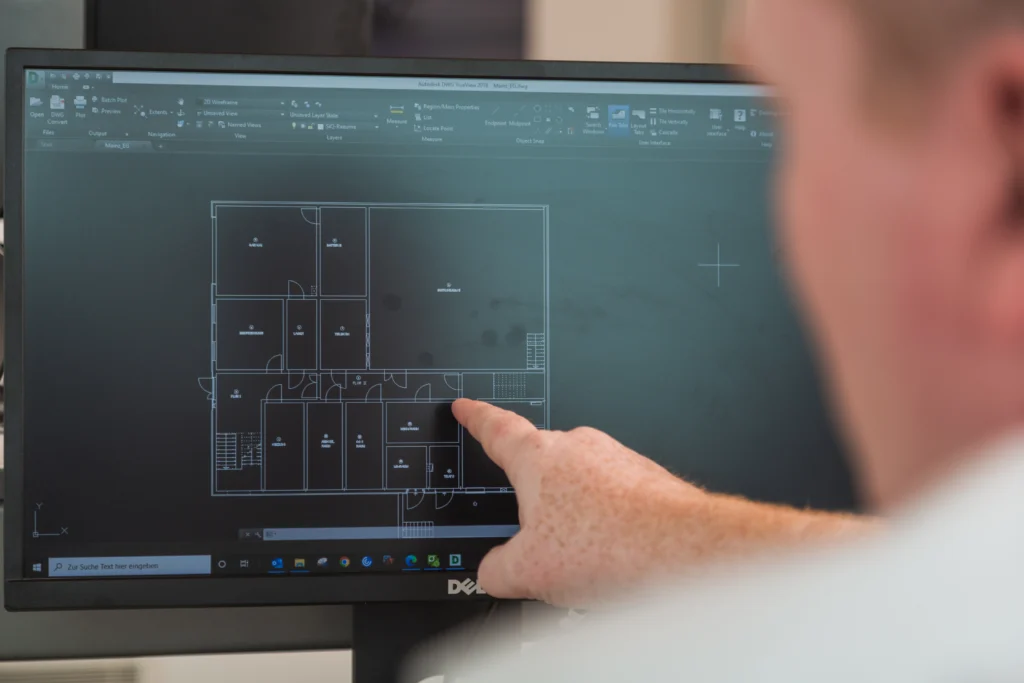
Data center architectural planning is based on technical drawings and digital models. CAD and BIM models enable continuous coordination of all trades, reduce interfaces, and ensure consistent planning statuses across all project phases.
When building a data center, the architecture determines how IT spaces, technical rooms, paths, and deliveries will work together. A well-thought-out data center design takes future expansions into account from the very beginning – whether in new construction or when upgrading an existing data center.
Project Workflow in Architectural Planning for Data Centers
Data center architectural planning follows a structured process where concept, planning, and implementation are closely integrated. The HOAI's service phases form the basis, allowing for complete coverage from initial analysis to implementation.
Fundamentals and Concept
Capture all technical and operational requirements and develop an architectural concept aligned with the planned infrastructure and future use.
Planning and Coordination
Detailing the architecture, considering technical, building code, and operational requirements. CAD drawings and BIM models ensure a consistent planning basis and coordinated collaboration among all stakeholders.
Implementation support
Support during the construction phase by coordinating trades and overseeing implementation. The goal is to correctly realize the planned architecture under real conditions.
Site Development and Permitting
Architectural planning is closely linked to the evaluation and development of suitable sites. In addition to analyzing existing areas, this also includes the targeted acquisition of locations for data centers and technical infrastructure projects.
Location acquisition for data centers
Suitable plots and existing properties are identified and assessed for their technical, energetic, and structural suitability. The focus is particularly on energy supply, grid connection, as well as available space and expansion possibilities.
Building on this, it is examined whether a location meets the requirements for operating and further developing a data center.
Location Analysis and Integration
Existing buildings and infrastructure are analyzed to identify potential uses and limitations. The structural framework, spatial structure, and technical conditions are assessed for their suitability for data center operations.
The goal is to integrate existing structures into the planning and develop them efficiently, rather than opening up new areas.
Approval processes and building law requirements
Parallel to planning, approval processes are prepared and supported. Building law requirements, changes in use, and site-specific requirements are incorporated into the architecture early on.
Consultation with authorities takes place throughout the project to ensure a approvable and feasible solution.
Architectural Requirements for Infrastructure Projects
The architecture of data centers and technical infrastructures is guided by clear operational and technical requirements. Buildings must be planned to enable stable operation while also responding flexibly to future adjustments. The goal is to create structural frameworks that reliably integrate technical systems and remain usable in the long term.
Operational Safety and Availability Buildings are designed so that technical systems can be operated and maintained stably.
Scalability and extensibility: Structures allow for customizations and extensions without fundamental interventions in existing areas.
Integration of technical systems Architecture, electrical engineering, and climate engineering are coordinated with each other and managed in digital models to reduce interfaces and ensure stable operation.
Data Center Security Architecture: Integration of physical security concepts, definition of security zones, and coordination of structural and technical protective measures for critical infrastructure.
Resilience, Redundancy, and Failover Structures: Spatial separation of critical systems, support for redundant supply routes, and planning of areas for emergency and restart concepts.
Architecture and Construction Law Consulting
The architectural and building law Consultation It examines the feasibility of planned measures and defines the structural framework for data center projects. The focus is on coordinating the use, technology, and legal requirements.
The examination covers building law requirements, changes of use, and site-specific regulations to ensure the feasibility of projects at an early stage.
The planning involves the development of design and execution documents that combine technical requirements and structural conditions.
Consultation with authorities structures approval processes, clarifies requirements in advance, and supports efficient implementation of construction projects.
Extended service phases and implementation
Beyond classical architectural planning, further service phases are also integrated into the project flow. These include the preparation and support of tenders, as well as assistance with award processes, to create a reliable basis for implementation.
During the construction phase, all stakeholders are coordinated, and the implementation is continuously monitored. The goal is to translate the planning consistently into execution and to identify deviations early on.
All project phases—from initial conception to commissioning—are coordinated. Through consistent planning based on uniform models and data, media breaks are reduced and stable implementation is ensured.

Data center architecture services
The architectural services include the planning and development of all structural foundations for data centers and technical infrastructure – from concept to implementation-ready planning. The goal is to develop buildings in such a way that technical systems can be efficiently integrated and reliably operated under real operating conditions.
Concept and Design
Development of functional data center building structures based on technical requirements, operational framework conditions, and specific project requirements.
Execution planning
Detailed architectural planning in the form of technical drawings and CAD-based documentation as the basis for construction, in close coordination with all project stakeholders.
Early integration of power supply, cooling, and security solutions into building planning to ensure stable and maintainable operation.
Creation and coordination of BIM models for the alignment of architecture and technical infrastructure. This structures planning processes, reduces interfaces, and centrally controls changes.
Implementing structured architecture for infrastructure projects
Thoughtful architecture creates the foundation for functioning data centers and technical infrastructure. It enables stable operation, efficient use of available space, and long-term expandability. At the same time, technical requirements, structural conditions, and operational processes are coordinated early on.
The combination of structured planning, digital methods, and an experienced team of architects creates solutions that are not only conceptually sound but can also be implemented and operated under real-world conditions.
Existing architecture for data centers
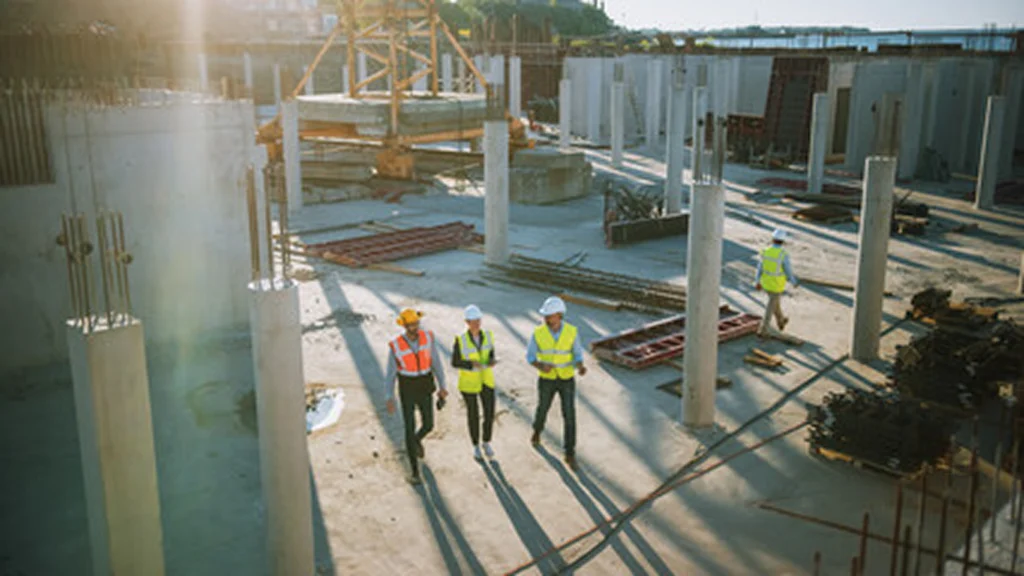
A key focus in data center architecture is the redevelopment of existing buildings. The goal is to adapt existing structures to new technical requirements while maintaining ongoing operations.
Existing areas, supporting structures, and technical conditions are analyzed and specifically further developed. Based on this, new systems are integrated into existing buildings, so that infrastructure is not newly created, but efficiently expanded.
Architectural planning for existing buildings is carried out in close coordination with the client. Existing structures are evaluated, adapted, and optimized with consideration for energy efficiency to create a sustainable and technically sound solution.