



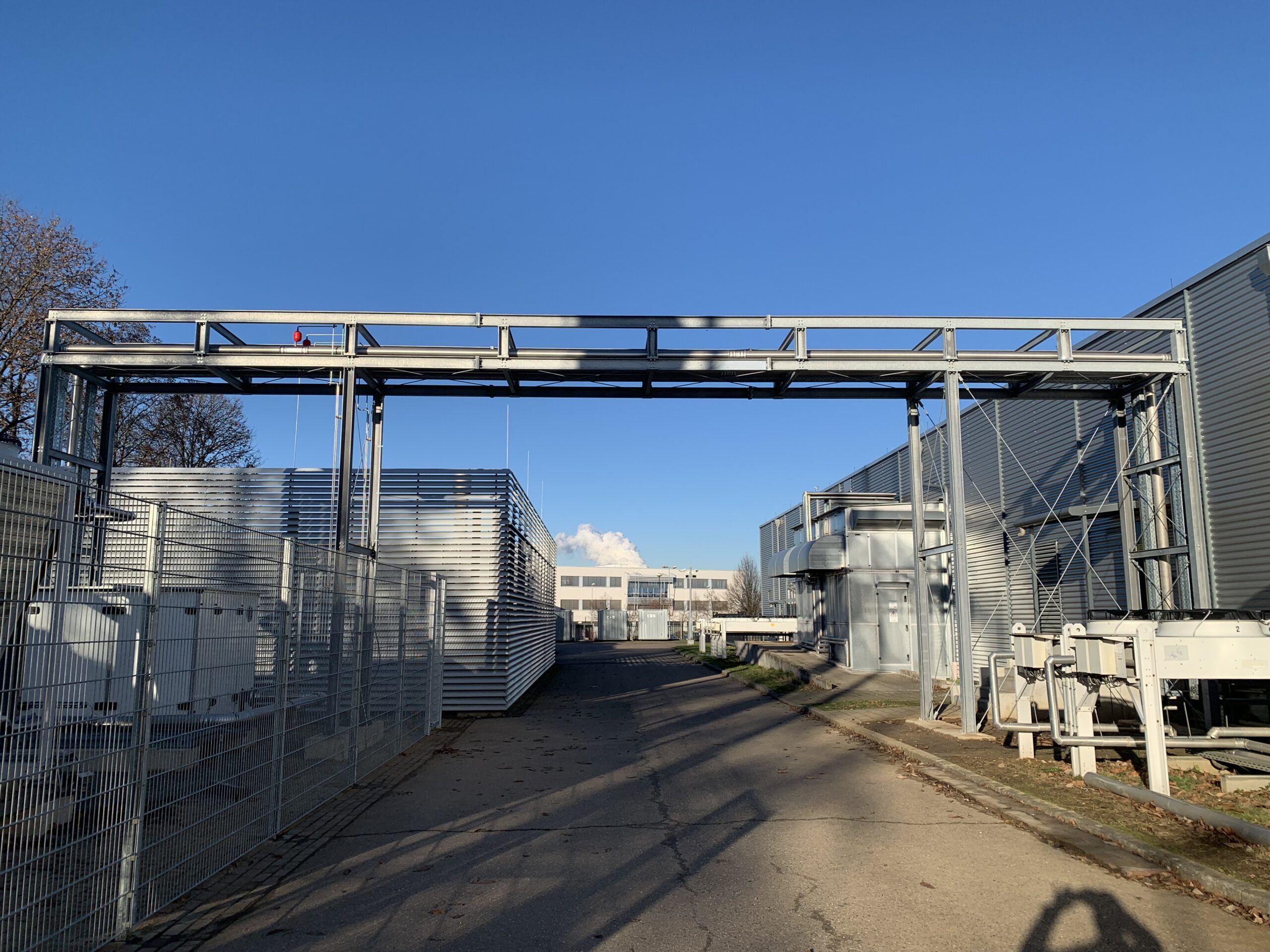
As part of a comprehensive infrastructure modernization project, Daterra (formerly FM Service) The deconstruction and complete reconstruction of a central technical area. The project included structural transformation: a historically developed, unstructured data center was transformed into an organized data center. Cold-gang structure Converted. In addition to the demolition of the old stock, the team installed a new climate system with an Cooling capacity of 500 kW. All measures were taken within six months in the continuous, uninterrupted operation of the active IT systems.
Project achievements: complete management of the renovation as general contractor
As general contractor, Daterra assumed overall operational responsibility and leadership for the modernization project. The scope of services included the seamless technical and organizational Interface control All the involved trades. Through a meticulous project management team, the project team ensured that all interventions to the building structure were carried out without interrupting the active customer systems.
- General contracting: The overall management of all departments during the dismantling of the old stock and the subsequent reconstruction of the technical area.
- Project management and coordination of the subcontractors: Continuous coordination and monitoring of the involved trade sectors throughout the entire construction period to avoid disruption to operations.
- Support for architecture: Technical planning and consulting for the design and construction of the external pipeline bridge and the climate control system.
- Scheduling: The reliable timing of all construction processes ensured the specified timeframe of six months from the start of the demolition work until the key handover.
Project highlights – restructuring towards a cold aisle architecture
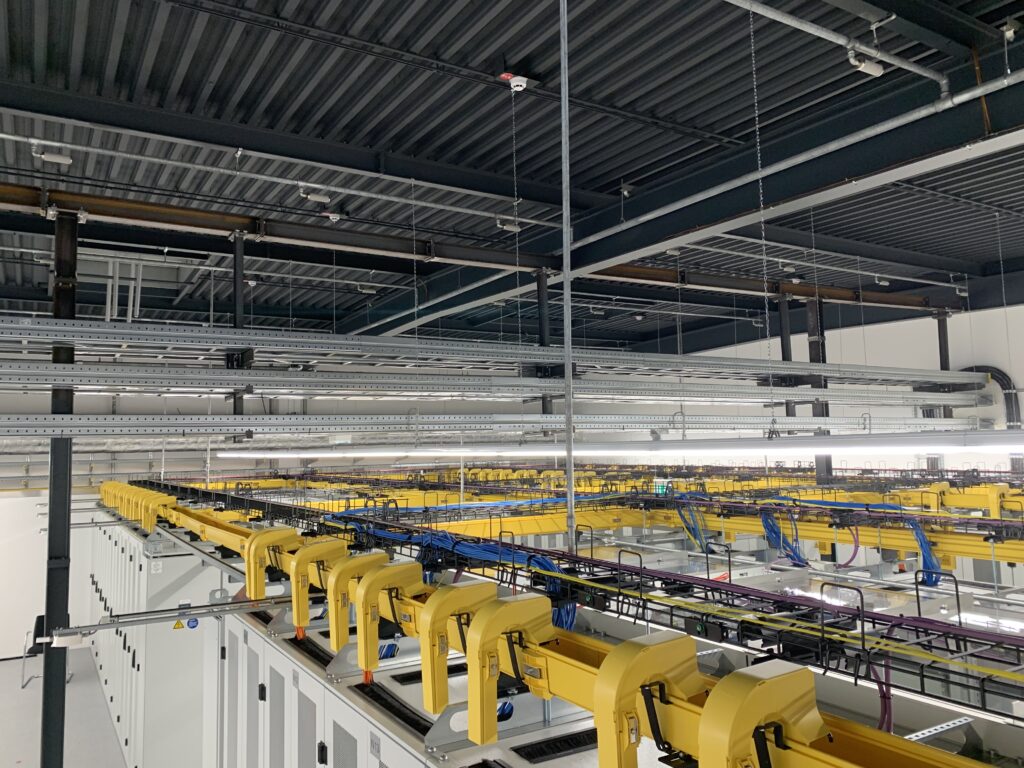
Daterra transformed the historically developed structures into an organized infrastructure that ensures high levels of performance density. The central milestone of the re-configuration is the reliable thermal separation of the air flows and a fail-safe media and energy supply.
The following technical specifications characterize the modernized technology area:
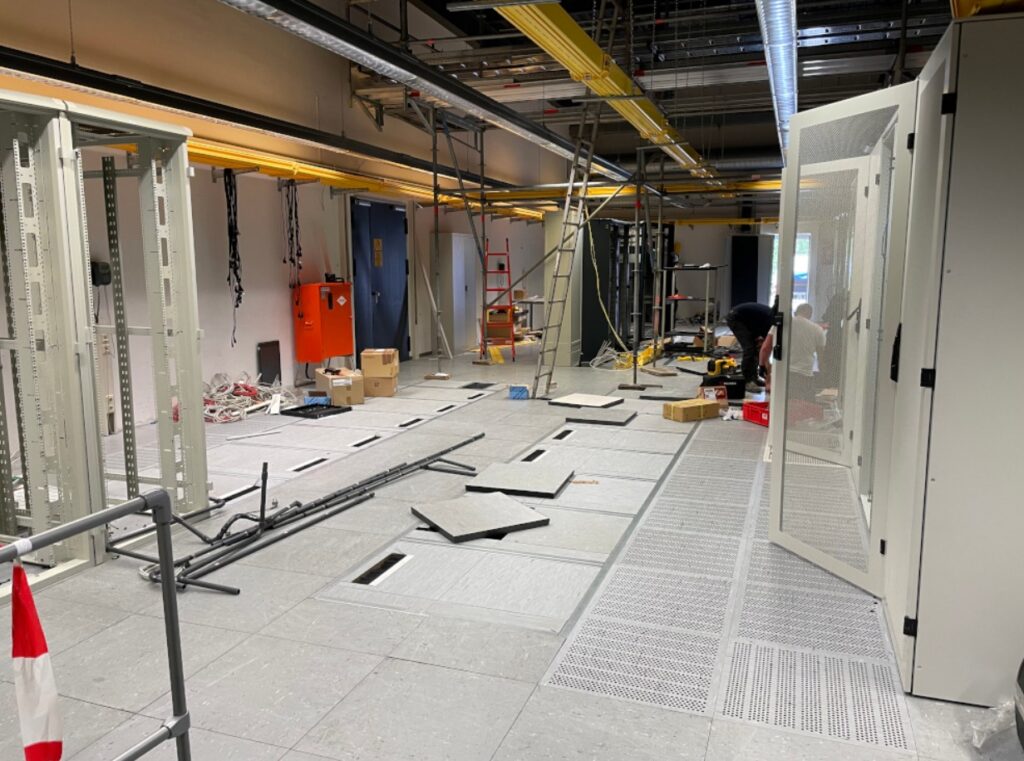
- Double floor system and cold-storage enclosure: Highly load-bearing floor structure for targeted control of the cooling air flows
- Climate GES system: Powerful cooling concept with a cooling capacity of 500 kW
- Steel tube bridge: Custom steel construction for the safe installation of the cooling media pipes
- Power supply and route guidance: Mechanical and technical overhaul of the energy distribution system, including new cable-based lines through adjacent adjacent spaces
- Security technology: Integration of modern surveillance systems to protect the entire technical area
Project execution: structured restructuring without interruption of operations
The operational restructuring was carried out in clearly structured phases to completely eliminate any disruption to the ongoing IT operations.
In the first phase, the project team carried out the gradual demolition of the old technology area. After the demolition of the old facilities, the following steps were taken: Pre-construction and assembly work for the new double-floor system and the construction of the steel structure. Subsequently, the specialist tradesmen installed the refrigeration technology, routed the cable ducts through the adjacent building areas, and renewed the energy and safety systems. After successful commissioning of all systems, the Commissioned handover Exactly six months after construction began.
Special challenges – cable-based route guidance through adjacent areas
The demolition and reconstruction work required the utmost precision, as the Demolition and reconstruction during operation The active system architecture was implemented. To prevent dust emissions, vibrations, and thermal fluctuations from existing IT areas, the assembly team implemented structural protective measures and scheduled noise-intensive work outside of regular operating hours.
An additional technical interface was provided by Installation of new cable routes in external rooms. The routing of the cables through adjacent building areas used by third parties required close coordination with the respective users. All openings and installation work had to be scheduled in a timely manner to avoid interfering with the external work processes.
The primary requirement was to convert an unstructured inventory into a structured one. Cold-gang architecture, Without causing interruptions in the power supply or Server room cooling This was achieved through the temporary switching of the supply paths and the gradual isolation of the server series, ensuring a smooth transition to the new structure with full fail-safe operation.