



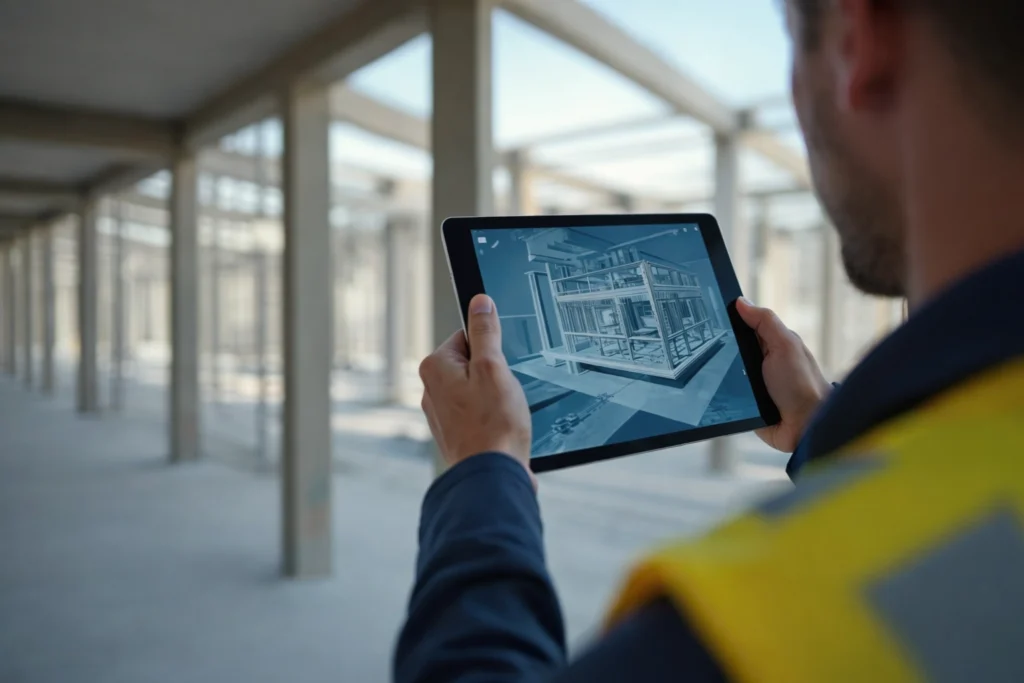
Build data center – sustainable implementation and modernization of technical infrastructure
The construction of data centers requires the implementation of complex infrastructures with high demands on availability, energy efficiency, and operational safety – from the integration of central systems to modernization during ongoing operations.
- Implementation of electrical engineering infrastructure, cooling, and security systems
- Coordination of all trades as a general contractor or project manager
- Modernizing and expanding existing data centers – even during ongoing operations
What does data center construction encompass?
Data center construction encompasses the technical implementation of all infrastructure components up to operational handover. The focus is on integrating power supply, cooling, security, and building technology under real operating requirements. All systems are implemented in a way that ensures availability, redundancy, and energy efficiency during operation.
The implementation includes the structural realization of the areas as well as the integration of electrical engineering systems such as power supply, UPS and network replacement systems. This is complemented by the installation of cooling and climate control systems as well as security and fire alarm systems. Fire protection technology.
In parallel, coordination of all trades and management of construction processes take place in order to align technical dependencies and reduce interfaces.
A focus is placed on existing projects. Existing infrastructures are analyzed, adapted, and expanded without interrupting ongoing operations. New systems are integrated into existing environments and implemented under real conditions, ensuring that technical solutions are not only planned but also function reliably in operation.
Data center construction project timeline
The construction follows a structured process where Data center planning, ...implementation and commissioning are closely intertwined. The goal is to reliably implement technical requirements and ensure a stable transition to operation.
Transition from planning to implementation
Existing concepts are adopted, reviewed, and adapted for the construction phase. Technical requirements are specified and translated into an implementable basis, so that all systems can be realized under real conditions and later adjustments can be taken into account.
Coordination and construction phase
All trades and subcontractors will be coordinated and centrally managed. Technical implementation will take place considering existing systems and ongoing operational requirements in order to maintain stable processes, coordinate interfaces cleanly, and avoid delays in the construction process.
Commissioning and Handover
Upon completion of construction work, system tests and acceptance of all relevant components will be carried out. The infrastructure will then be transferred to operations and formally handed over to the operator, ensuring stable and secure operation.
Build a data center – Prepare implementation in a structured manner
Whether new construction, expansion, or renovation during ongoing operations: structure your project requirements and create a robust foundation for safe and efficient implementation.
Site analysis and permits for data center construction
The site analysis and approval processes are closely linked to the technical implementation. It is examined early on whether a site meets the requirements for infrastructure, energy supply, and operation, and under what building law conditions construction can take place. The goal is to ensure feasibility and to prepare the construction process thoroughly.
Evaluation of sites from a technical and energy perspective
The connection to the power and grid infrastructure is evaluated in terms of grid connection, redundancy, and expansion possibilities. At the same time, it is examined which energy is available at the site and to what extent additional loads can be accommodated. In addition, existing infrastructure and buildings are analyzed to identify utilization potentials and integrate existing systems into the implementation.
Building applications and changes of use are prepared and accompanied with consideration of the technical requirements. Coordination with authorities is carried out concurrently with the project to efficiently manage approval processes. Building law requirements and technical implementation are coordinated in such a way that a approvable and simultaneously feasible solution is created.
General Contractor for Sustainable Data Center Construction
Daterra takes on data center projects as a general contractor and bundles all construction and technical services under a central project responsibility. Through the close integration of Architecture, Technical implementation and project management coordinate processes, reduce interfaces, and implement projects under real-world conditions. At the same time, the focus is placed on the further development of existing infrastructure to efficiently utilize resources and minimize construction costs.
All construction and technical processes are centrally coordinated, ensuring that requirements are consistently met and workflows are properly aligned. This includes both the management of the construction phase and the integration of all technical systems through to commissioning.
Complex infrastructure projects require the involvement of specialized companies. These are integrated into the project workflow and coordinated across all trades. This ensures quality and efficiency, even for demanding projects and during operations. At the same time, existing infrastructure is taken into account to use resources efficiently and reduce the need for new construction.
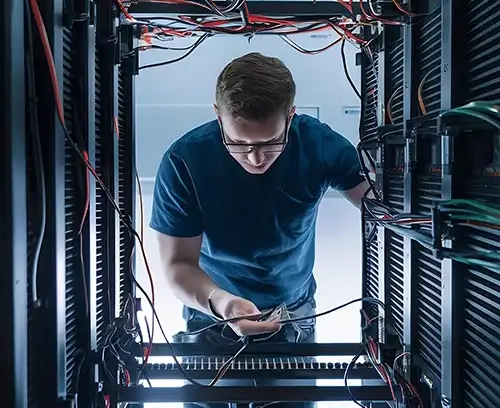
Data center construction services
Data center implementation includes the integration of all technical and construction components into ready-to-operate infrastructure. Planning specifications are translated into concrete systems, and all trades are coordinated to ensure stable and efficient operation.
Construction execution and technical implementation
Implementation will be based on existing plans and adapted to the requirements of the construction phase. Trades will be coordinated, interfaces reduced, and construction execution supported by quality assurance.
Electrical Engineering Infrastructure in Data Centers
The electrical implementation includes power supply, transformer substations, and UPS systems for server rooms and battery systems. This is supplemented by emergency power units to secure operations. All systems are integrated to ensure a reliable and energy-efficient supply.
Climate control technology
HVAC will be implemented according to actual load requirements. The focus is on energy efficiency Server Room Cooling In the foreground, to optimize later operation. Existing systems will be integrated if possible and adapted to new requirements.
Security and Fire Protection Systems
Safety and fire protection concepts are implemented structurally and technically. These include Fire suppression systems in server rooms, physical security measures and the protection of critical infrastructure.
Data center constructionRequirements for Sustainable Infrastructure Projects
The construction of data centers requires coordinated implementation of all technical systems under real operating conditions. The focus is on availability, scalability, and efficient use of existing resources. Infrastructure is implemented in such a way that it can be operated stably and expanded as needed without major interventions.
Availability and Redundancy Power supply, cooling, and safety-relevant systems are built redundantly to compensate for the failure of individual components. Maintenance and expansions must be possible without interrupting operations.
Scalability and Load Development The infrastructure will be designed to accommodate increasing performance requirements. Expansions can be implemented gradually without major overhauls of existing systems.
Integration of technical systems Electrical engineering, air conditioning, and structural elements are technically coordinated with each other. The goal is clean interface coordination and stable overall operation.
Operational energy efficiency: Systems are implemented to reduce energy losses and lower operating costs. The coordination of power supply and cooling plays a central role in this.
Modernization instead of new construction: Existing facilities and buildings are used further whenever possible and expanded in a targeted manner. This saves resources and avoids additional construction costs.
Building a data center while it's in operation
The implementation of data center projects during ongoing operations places special demands on coordination and technical execution. Existing systems must continue to run stably while new infrastructure is integrated or existing systems are modernized in parallel. The focus is on implementation without interruption as well as on the further development of existing sites.
Temporary infrastructure through mobile data centers
During renovations or expansions while in operation, mobile data centers They can be used purposefully. They enable the temporary outsourcing of systems or the provision of additional capacities while existing infrastructure is being adapted. This allows interventions to be better managed and risks in ongoing operations to be reduced.
Technical implementation during ongoing operations
The implementation includes, among other things, the switching of AC and DC systems as well as the replacement of UPS systems during ongoing operation. In addition, power and cooling systems will be expanded without interrupting existing processes. All measures will be coordinated in such a way that they can be safely implemented under real conditions.
Requirements in ongoing operations
In ongoing operations, preventing failures is the priority. Measures are implemented in such a way that availability is always guaranteed. At the same time, all work is carried out under real conditions, which means that existing system structures and dependencies must be taken into account.
Sustainable modernization and expansion without operational interruption
Existing infrastructure will be selectively reused and adapted to new requirements. Transformers, distributions, and battery systems will be expanded or replaced, while inefficient components will be modernized. Air conditioning systems will also be optimized to reduce energy consumption and operating costs.
Building a data center with Daterra – Implementation under real-world conditions
The costs of a data center are largely determined in the planning phase. Decisions regarding the design of power supply, cooling, and redundancy directly impact capital expenditures as well as long-term operating costs.
Within the scope of data center planning, costs are systematically estimated, budgets are evaluated, and technical variants are compared. The goal is to design systems according to requirements and develop economically viable solutions without incorporating unnecessary reserves.
At the same time, planning influences ongoing operating costs, for example through energy consumption, maintenance effort, and expandability. Coordinated planning reduces follow-up costs and creates a reliable foundation for the economical operation of the data center.
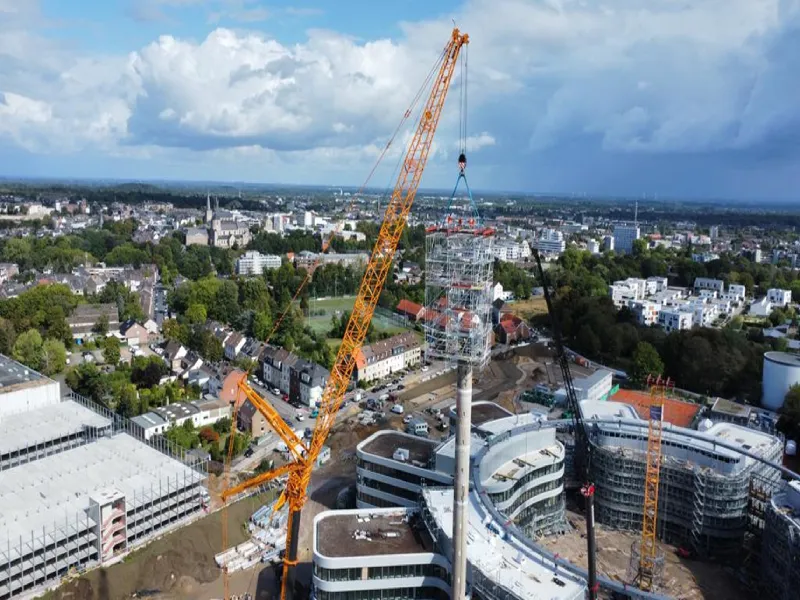

Areas of application for data center construction
The construction and modernization of data centers occur in various application areas, each with specific technical requirements. Depending on the intended use, availability, scalability, and integration into existing infrastructures take precedence.
Telecommunications Highly available infrastructure with redundant power supply and stable network connection, often associated with modifications during ongoing operations.
Colocation Flexible and scalable data center structures that can be adapted to different customer requirements and expanded incrementally.
Industry and Energy Supply Integration of data centers into existing systems with a focus on operational security, energy efficiency, and adaptation to existing infrastructure.
Implement data center construction in a structured manner
Whether it's new construction, modernization, or expansion of existing properties – coordinate requirements early on and create a clear foundation for technical implementation.
Frequently Asked Questions About Data Center Construction
How much does it cost to build a data center?
The costs depend heavily on size, power density, and technical equipment. Key factors include power supply, cooling, redundancy concepts, and safety requirements. The location and existing infrastructure also have an influence. Without specific requirements, no reliable figure can be given.
How long does it take to build a data center?
The duration varies depending on the scope of the project. Smaller projects or extensions can be implemented within a few months, while larger new constructions require significantly more time. Renovations during ongoing operations require additional coordination, as measures are carried out in stages. For a concrete estimate of the project duration, please feel free to contact us – the Daterra team will be happy to advise you.
Can a data center be built or expanded while it is running?
Yes. Many projects are implemented during ongoing operations. This requires precise planning of individual steps so that systems continue to run stably. This includes switchovers, temporary redundancies, and close coordination of all trades.
New construction or modernization – what makes more sense?
This depends on the condition of the existing infrastructure. In many cases, modernization is more economical, as existing buildings and systems can continue to be used. New constructions offer more freedom, but involve higher costs.
What are the requirements for the location of a data center?
The location must offer a sufficient energy supply, stable network connectivity, and suitable structural conditions. Additionally, expansion possibilities and integration into existing infrastructure play a role.
How is the fault tolerance of a data center ensured?
Data center fault tolerance is ensured through redundant systems, clear separation of critical components, and coordinated maintenance concepts. The goal is to absorb failures of individual components without impacting overall operations.